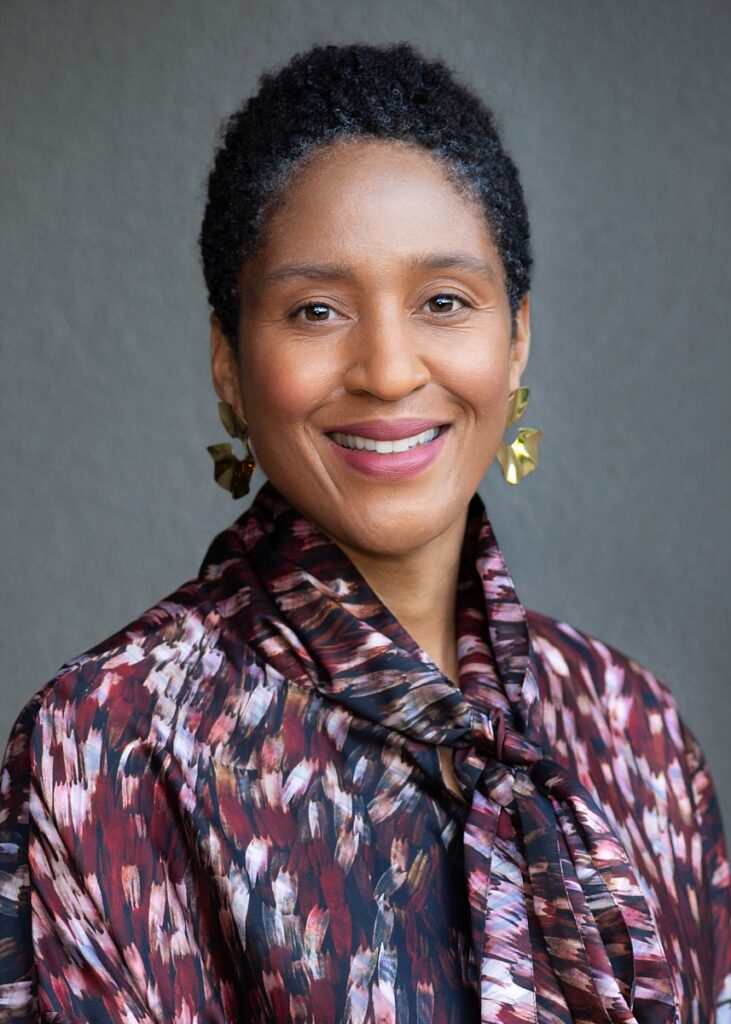
Earlier this month, CalArtian and celebrated curator Makeda Best (Art BFA 00, MFA 02) was named the Joel and Anne Ehrenkranz Chief Curator of Photography at The Museum of Modern Art (MoMA) in New York.
“Makeda’s distinguished career as a curator, scholar, and institutional leader—spanning major collections at Harvard and Oakland—brings a fresh vision to the field. She champions photography’s singular power to connect with audiences through storytelling, seamlessly crossing boundaries into sociology, environmentalism, performance art, labor, and civic life,” said Christophe Cherix, the David Rockefeller Director of MoMA, in the museum’s announcement.
Best heads to MoMA from the Oakland Museum of California, where she has served as the Deputy Director of Curatorial Affairs since 2023. She had previously served as the Richard L. Menschel Curator of Photography at the Harvard Art Museums, as well as its interim head of the Division of Modern and Contemporary Art.
With more than 25 years of experience working in the arts, Best has authored and contributed to numerous books, exhibition catalogues, and scholarly publications. In 2022, the catalogue for her Harvard Art Museums show, Devour the Land: War and American Landscape Photography Since 1970, earned the Aperture/Paris Photo Photography Catalogue of the Year Award. Last year, she curated the exhibition, American Job: 1940–2011, at the International Center of Photography, to much acclaim.
While at CalArts, Best studied studio photography with the late photographer Allan Sekula and filmmaker Billy Woodberry. She then went on to receive a PhD in the history of art and architecture from Harvard University. She has taught at Harvard, Tufts, the University of Vermont, and California College of the Arts.
Best will join MoMA in September, where she will oversee the world-renowned Department of Photography, which was founded in 1940 and boasts a collection of more than 30,000 works. As Best explained to The New York Times, “This department has influenced, implicitly or explicitly, so much of how we understand the medium.”