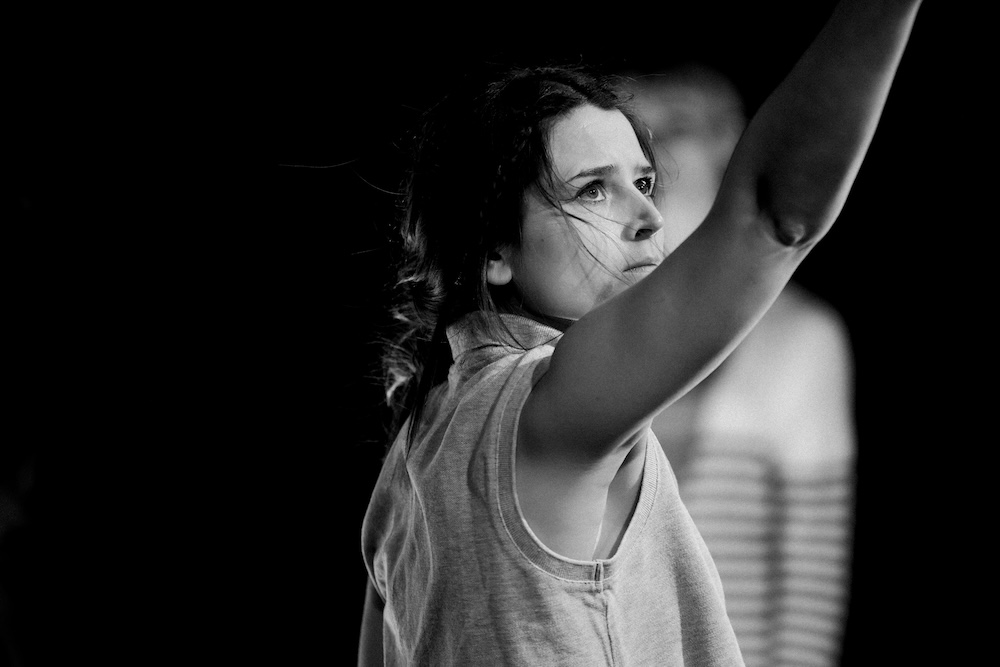
Karolina Kwaśniak (Theater MFA 24) was recently selected as one of a small group of actors from around the world to participate in Biennale College Teatro 2026, a four-week residency focused on experimentation and collaboration. Led by four-time Academy Award-nominated actor Willem Dafoe, who serves as artistic director of the Theatre Department at La Biennale di Venezia, the program brings together emerging artists under 30 as part of the 54th International Theatre Festival.
The selection process is highly competitive. As Dafoe noted in a recent interview with The Hollywood Reporter, “We received hundreds and hundreds and hundreds of applications… I personally went through them and picked 11 people.”
24700 caught up with Kwaśniak via Zoom at her home in Los Angeles ahead of her trip to Venice, Italy, to talk about moving from her native Poland to attend CalArts, life since graduation, and how a technical glitch nearly cost her this opportunity.
What have you been up to since graduating from CalArts in 2024?
I’ve been doing a mix of film and theater work. I also spent some time back in Poland while transitioning from my student visa to an O-1 artist visa, which gave me the chance to be there for some important family moments. Some were difficult, some were really meaningful, and I was grateful I didn’t miss them. And I got engaged.
When you decided to move from Poland to attend CalArts, what felt like the biggest unknown? Did that fear match the reality?
Honestly, everything felt terrifying. I had never been to California, didn’t know anyone here, and didn’t even fully understand how far away it was. I arrived without an apartment and had to stay on someone’s couch. After a few days, I called my boyfriend and said, ‘I think I made the biggest mistake of my life.’
There was also a cultural shock. From Europe, you think you understand American culture because of films, but it’s very different when you’re actually here. Even basic things felt overwhelming at first: finding grocery stores, figuring out transportation, just navigating daily life. It felt like starting from zero.
The thing I was sure of was CalArts. I knew it was the right fit. It felt like a place where I could explore, try different things, and build confidence, which was something I was really lacking at the time.
You were selected for the Biennale College Teatro. What drew you to apply?
I found out about it thanks to my CalArts movement teacher Anthony Nikolchev, who performed his work The (Un)Double at the Theatre Biennale in Venice last year and who posted about the program on Instagram. Willem Dafoe and the Biennale caught my attention immediately. I read more about the program and it sounded like a dream: four weeks in Venice focused on exploration, without a fixed outcome, just the process of creating with other artists.
At the time, I was back in Poland during winter and struggling a bit, trying to figure out what was next for me as an artist. I had been doing some commercial work, which is great, but not necessarily what I want to focus on long term. This opportunity felt almost impossible, but I thought, why not try?
Also, I realized it was the only year I could apply. I was turning 30 a week after the deadline, so it felt like a now-or-never moment.
What was it like finding out you were selected?
It was very unexpected. I missed the emails because of a technical issue, so they actually called me from Venice. At first, I didn’t even realize what the call was about. Then I found out they had emailed me multiple times trying to reach me.
They told me, ‘We emailed you so many times, and you’re not answering.’ And I was like, ‘What emails?’ I had been checking my inbox and spam constantly.
It turned out my email had stopped receiving messages from them entirely, even though it was working for everything else.
It felt unreal. I also appreciated very much that the staff at the Biennale were so persistent in trying to reach me and didn’t just give up when I didn’t respond to emails. It reminded me of something I heard in relation to castings and being rejected as a performer—that if people really want to work with you, they’ll find a way and that you want to work with people that want to work with you.
Looking back at your time at CalArts, what prepared you for this opportunity?
It wasn’t one specific class or person. It was the whole experience. The different approaches from professors, the sense of play, the rigor, and the freedom to explore all shaped how I work now.
Also, just living here and going through everything that comes with it: being far from home, balancing work and school, struggling financially, being exhausted. That gave me a sense of resilience. It made me realize I’m capable of more than I thought.
You’ve said fear has guided your career. Did that show up here?
I think something shifted. I wasn’t afraid of the opportunity itself, but I did feel pressure while applying. I caught myself trying to ‘stand out’ in a performative way, and at my fiancee’s suggestion, we re-recorded the audition tape. The first version looked polished and didn’t feel like me.
The second version felt more honest and vulnerable. Truer to who I am, and I think that made a difference.
What are you most interested in exploring during the program?
I want to foster the childlike curiosity and wonder that I think I naturally have as a person and bring that to my work. I don’t have a specific plan, but I do want to nurture the same vulnerability I showed in my audition tape and just play, explore, roll around the floor, and be weird with other artists in one space.
Any advice for current CalArts students?
I think this path comes in waves. There are highs and lows, and it’s easy to feel like a difficult moment will last forever, but it won’t.
Keep asking yourself what kind of artist you want to be and what stories you want to tell. Even when you’re doing work that isn’t ideal, staying connected to your values matters.
If you stay true to yourself, do the work, and lead with kindness, things will move in the right direction.
Biennale College Teatro 2026 runs for four weeks, from this week to June 21. Each week, one of the mentors will lead a workshop. Along with Dafoe, the mentors involved in the project are Evangelia and Mary Rantou, Simon McBurney and Silvia Costa. The daily program includes two distinct parts: activities led by mentors and free, individual and/or group study. For more information about the program go to La Biennale di Venezia’s website.